Testing Victor’s Graffiti Lettering as a Commercial Graphics Freebie
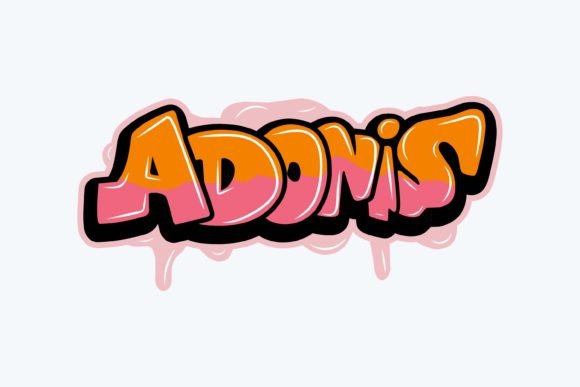
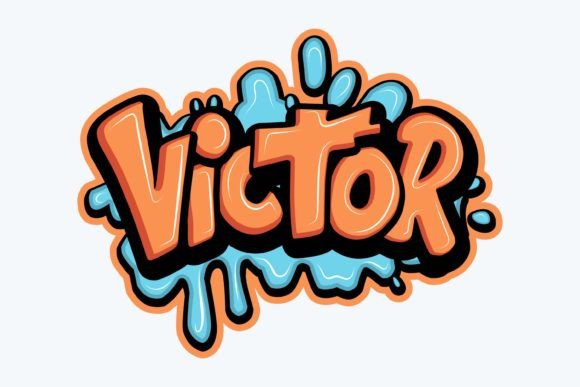
As someone who sells digital products across several platforms, my first move with any new graphic design asset is to evaluate it from a seller’s perspective. Victor, a graffiti lettering typography art illustration, landed on my desk while I was curating a new collection for my Etsy shop. My initial impression was immediate: this is bold, urban, and full of expressive personality. It carries a playful yet confident mood, leaning towards a modern, street-art aesthetic that would appeal to a niche audience looking for something energetic and decorative.
The Visual Personality & Market Appeal
Victor doesn’t whisper; it shouts. This makes it perfect for products targeting a youthful, trendy, or artistic buyer. Think of customers interested in skate culture, urban decor, festival merch, or bold personal branding. For my shop, this meant considering it for t-shirt graphics, tote bag prints, or as a standout element in digital paper packs aimed at a less traditional, more adventurous creative entrepreneur. Its handcrafted, artistic feel adds a perceived value of uniqueness, which is gold in crowded marketplaces.
Real Product Applications: Where Victor Excels
I started by mapping out concrete uses. Given its features—it's fully editable, comes with AI, EPS, and SVG master files—the applications are broad. For SVG products, Victor is a prime candidate for Cricut projects like vinyl decals or intricate sticker designs, provided the cut lines are clean. As a PNG design, it shines in printable wall art, especially larger formats where the detail can pop. It integrates beautifully into Canva templates for social media graphics or blog banners, adding a punch of visual hierarchy.
For sublimation designs, I'd test it on tumbler wraps or mug designs where the full-wrap area can showcase the art. In product bundles, Victor could anchor a themed collection—say, a "Urban Street Art" kit combining it with matching patterns and simpler fonts. It’s also strong for promotional visuals: using a scaled-down version in a listing image or product mockup can instantly communicate the vibe of an entire collection, boosting thumbnail appeal.
Strategic Use in Product Presentation
Professional presentation is everything. Victor can significantly lift the perceived value of a product line. I envision using it in mockup previews for t-shirt graphics, where it dominates the center, creating a strong focal point. For seasonal collections, like a summer festival series, it could serve as a consistent branding element across different product types—invitation templates, planner stickers, even packaging design—building a cohesive visual story that builds customer trust.
However, its strength in large formats means it should be deployed thoughtfully. In a crowded thumbnail on Etsy or Creative Fabrica, a very complex version might become noise. I'd test a cleaner, perhaps monochrome variation for small previews to ensure click-through potential isn't lost.
Caution Zones & Practical Seller Checks
Not every graphic design asset is universal. Victor’s detailed graffiti style means it should be used carefully in certain contexts. For tiny sticker details or where clean cutting lines are paramount for a Silhouette project, I’d meticulously inspect the SVG file quality in my software first. Its intricacy might not translate well to low-resolution print products or overly complex layouts where it competes with other elements.
Testing on dark backgrounds is essential; some color variations could lose contrast. Also, in text-heavy templates like greeting cards, Victor would likely serve best as a decorative header rather than the main text block. Pairing it with a clean sans serif font for supporting information would balance the design.
A Step-by-Step Pre-Publication Test Run
Before I list any product containing Victor, I run a real-world scenario test. First, I confirm the commercial license covers my intended use. Then, I open the editable vector files in Adobe Illustrator to verify everything is indeed modifiable—colors, shapes, scaling. I create a few quick mockups: a t-shirt, a mug, and a wall art print. I preview these as marketplace thumbnail images to see if they stand out.
Next, I test the PNG transparency on both white and dark background mockups. For SVG-based products, I might do a test cut on my Cricut with a small sample. I also check how it looks when paired with different font styles—a serif font for a quirky contrast, a script font for a more artistic blend—to offer customers design flexibility. Finally, I organize the files clearly, as if for a customer, ensuring the AI, EPS, and SVG files are cleanly labeled and ready for digital download.
Final Thoughts for the Business-Minded Creator
Victor is a powerful graphic design asset for sellers targeting a specific, style-conscious audience. Its value lies in its editable versatility and strong visual personality. For print-on-demand sellers, Etsy digital download shops, or Canva template creators, it provides a ready-made, professional-looking element that can accelerate product development. The key is to match its boldness to appropriate products—large-scale printables, merchandise graphics, or thematic bundle anchors—and to always conduct those practical file and mockup tests before publishing. In a marketplace where visual storytelling sells, Victor offers a compelling character to build a story around.